
What is Feng Shui?

LK Feng Shui - DSC 5558 1

What is Feng Shui?

Feng Shui stems from a Taoist belief that our lives are connected to and flow with the environment around us. It originated in China between 3,000 and 5,000 years ago.

The principles of Feng Shui are based around nature. In Chinese, it means ‘wind’ (feng) and `water’ (shui) —  powerful natural forces which flow continually around the Earth.

As humans, we are all influenced by our surroundings. We instinctively notice when the energy of a place feels `off’.  That bad energy can have adverse effects — stress, inertia, poor sleep, too many arguments and a general feeling of overwhelm.

Through subtle changes, Feng Shui resets and rebalances our living or working space so that it becomes a more harmonious place to spend time. Good energy flows freely and straight away, you feel more comfortable.

My name is Lynn Kingdon and I’m a Feng Shui consultant working in homes and businesses throughout Surrey and Sussex. If you’d like a no-obligation conversation, I’d be delighted to hear from you.

The importance of `chi’ in Feng Shui

In English, there’s no direct translation for chi. We describe it as energy, although it’s more complex than that.

Chi is the vital life force which flows through everything, including ourselves. You can’t see it, but you can certainly sense chi. You will have experienced it when you enter a room and instantly feel good or bad about the space.

When chi moves too fast or stagnates, it undermines our wellbeing, our relationships and even our finances. Allowing it to flow freely opens up pathways to abundance, stability, harmony and success.

While this might sound slightly magical, there is logic to it. The invisible, universal force chi is connected to the Earth’s magnetic field. This is why compass points are such an important element of Feng Shui.

Yin and yang

You’ll have probably heard of yin and yang. The concept (and its well-known black and white symbol) became popular in 1960s youth culture.

While chi is the energy which surrounds us, yin and yang are its two primary forces. They are opposing yet complementary to one another.

  • Yin is feminine energy — cool, still environments, quiet spaces, dark colours.
  • Yang is masculine energy — hot, active environments, lively spaces, bright light colours.


Getting the balance right is important. Too much yin can lead to lethargy, difficulty concentrating and lack of motivation. Too much yang can cause restlessness, frustration and anger.

Given that each room in your house has a different function, each space should have its own balance of yin and yang energies.

LK Feng Shui - DSC 6390 2
Feng Shui consultation

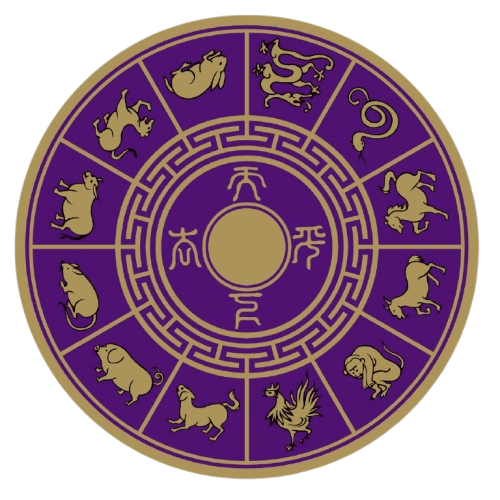
The 12 Chinese animals

There are 12 animals in the Chinese zodiac — rat, ox, tiger, rabbit, dragon, snake, horse, goat, monkey, rooster, dog and pig — each assigned according to your birth year.

However, there are actually three more animals in your zodiac. They relate to the month, day and hour of your birth. You therefore have four animals in total.

The 12 Chinese zodiac animals are also combined with five elements  — fire, earth, metal, water or wood — and they too are linked to your birth year, month, day and hour.

Each pillar of your birth data has an animal and element combination which interact with each other and, in turn, influence different aspects of your life.


  • Year — You as an individual, your friends and family
  • Month — Your career and wealth
  • Day — Day-to-day life, the relationship with your inner self and with your partner
  • Hour — Children and assets


Your birth data is important. It provides a wealth of information which is unique to you — the compass directions  which will have the most favourable impact, along with the animal and element which can bring wealth into your life. 

My name is Lynn Kingdon and I am a feng shui consultant. If you’d like a no-obligation conversation, I’d be delighted to hear from you.
The 5 Feng Shui elements

Feng Shui divides the world into five elements, and each has their own type of chi.


  • Fire — Passion, excitement, wealth, expansiveness, boldness
  • Earth — Security, stability, strength, balance, knowledge
  • Metal — Clarity, efficiency, focus, flexibility, productivity
  • Water — Abundance, prosperity, purification, wisdom, movement
  • Wood — Creativity, growth, new life, intuition, health


Feng Shui encourages each element to work together much like an orchestral symphony, rather than an instrumental solo.

Again, it’s finding the right balance, depending on the purpose of the room and the individuals who spend time within the space.

I’m Lynn Kingdon, a Feng Shui consultant. If you’d like a no-obligation conversation, I’d be delighted to hear from you.

sandalwood for relaxation and meditation, meditation concept

FAQs

You’ll have questions so I’ve asked some of them here. If your question doesn’t appear, please feel free to get in touch. I’m always happy to provide the answer:

An in-person consultation is £496. A virtual online consultation costs £379. I’m happy to offer payment by instalments. Just let me know if you’d like to take this option. We can set a payment schedule which suits both of us.

An in-person consultation takes 2-3 hours. We’ll have at least one discussion beforehand — a pre-consultation about what you want to achieve from the process. Online, it takes around the same amount of time and, again, we will have a discussion beforehand about your objectives. 

Yes, Feng Shui can work via a video call. The session works on the same principles as an in-person consultation. The only difference is that I’ll be guiding you as you move around your living space or business, finding its centre and establishing the compass directions.

I’m based in Horsham and will travel throughout East Sussex, West Sussex and Surrey. Don’t worry if you live outside this area. We can arrange an online consultation. Alternatively, I can come and see you in person — although I will need to recover travel expenses.

Yes. I’ll treat your home as one area, but I can narrow down the consultation to specific rooms. In my experience, the most popular rooms tend to be bedrooms and kitchens — but a consultation can focus on anywhere in your home.

Yes. Feng Shui works extremely well in gardens because it’s based on creating harmony within the natural environment. I’ll help you use colours, shapes, specific types of plants and water features to make your garden a haven of tranquillity and calm.

I’ll need your date of birth and, if known, the time you were born. I’ll also ask you for the dates and times of birth of other people in your household or business. In addition, I’ll ask for a floorplan of your home or place of work. If you can’t get hold of a floorplan, don’t worry. I can give you advice on how to get hold of one, or we can draft a floorplan as part of the consultation.

Please don’t. It’s important for me to see the daily, real world environment in which you’re living or working. It helps me understand the impact this is currently having on you and your wellbeing.

It’s almost immediate. Once things are moved around and specific colours are introduced, the energy will shift and you will feel the difference.  As for the overall result, the timescale depends on your desired outcome and your willingness to embrace the process. Remember, Feng Shui clears the pathway to what you desire. It sets the wheels in motion, but it won’t do all the work for you. To get the results you want, it’s important to be engaged with the process and open to the idea of change.

If you’re open to it, Feng Shui will continue to provide what you’re looking for. You’re not stuck with what’s happened in the past. You can move forward. Feng Shui is a continual process and once you understand its core principles, you can use them throughout your life.

As you probably know, your Chinese animal is related to your birth year. There are 12 of them —  rat, ox, tiger, rabbit, dragon, snake, horse, goat, monkey, rooster, dog and pig.

However, it’s more nuanced than that, because alongside your birth year animal, you have three others, each assigned according to the month, day and hour of your birth.

The Chinese zodiac also combines the 12 animals with five elements — fire, earth, metal, water or wood. Again, the elements are assigned according to four pillars of your birth data. 

It’s this combination of animals and elements which adds layers of meaning to the signs. The animal and element will interact with each other in different ways, influence separate areas of your life and have compass directions or locations which naturally suit them.

I’m Lynn Kingdon. Shall we have a chat? I can explain more about how it works and you can see what you think.

Skip to content